
Analog photography, why i still do it
Why Photographing in Analog Still Matters in an Increasingly Digital World
Especially in Football Culture.
I shoot digital. Most photographers do. Digital is fast, flexible, dependable, and essential in a modern workflow. It pays the bills, meets deadlines, and delivers consistency. But even as someone rooted in digital photography, I believe photographing in analog has never been more important, particularly when documenting football culture.
Because football, at its heart, is not a digital experience. It’s a lived experience.
Football is memory, routine, inheritance. It’s passed down through generations, lived through repetition, and felt more than it’s explained. Analog photography speaks in that same language.
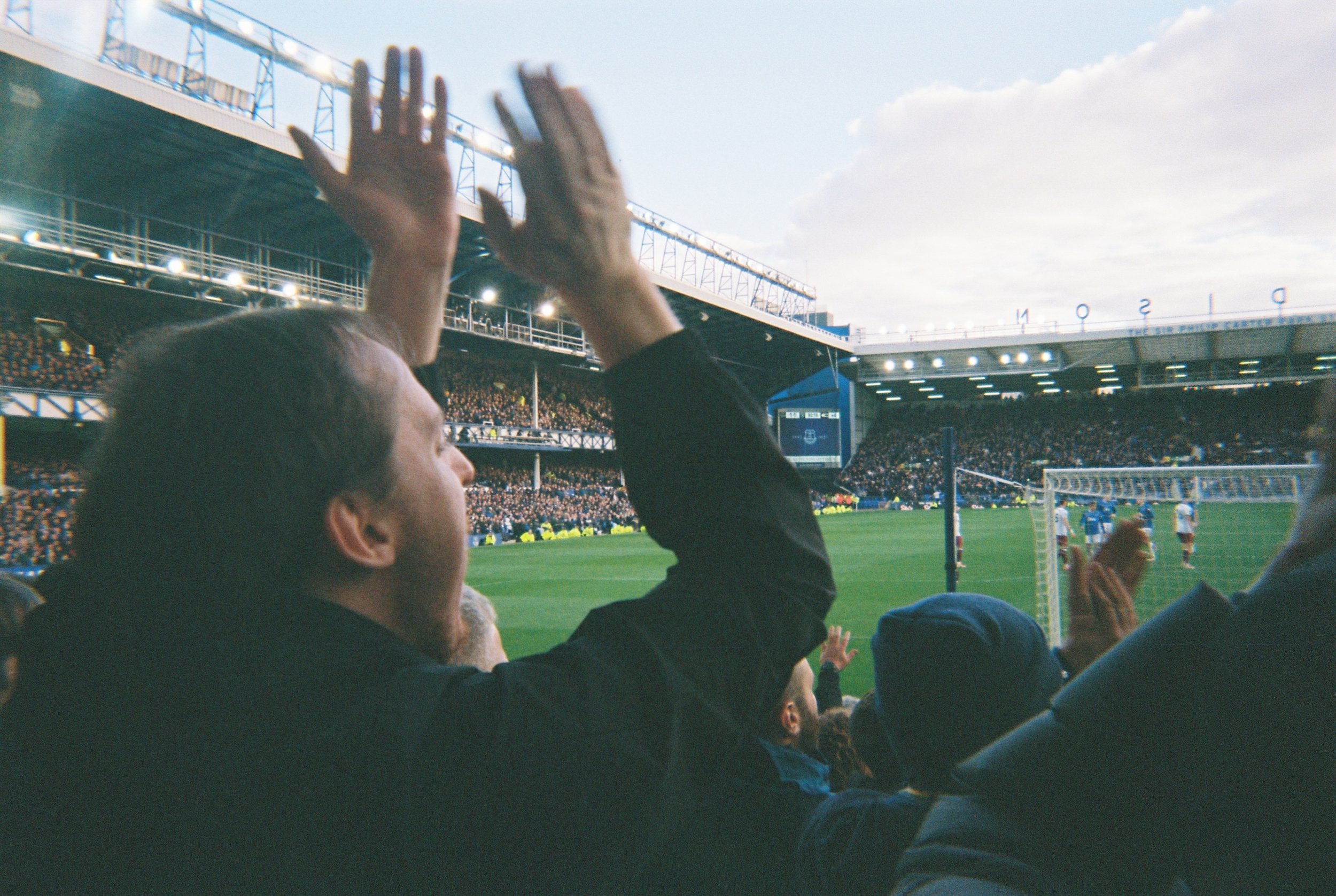
Everton fans in the Gwladys Street with arms aloft
Slowing Down in a World That Never Stops
Digital photography encourages volume. Thousands of frames, instant review, immediate sharing. It’s efficient, but it’s also disposable. Images are made, uploaded, scrolled past, and forgotten in seconds.
Analog demands something different. With film, every frame costs you time, money, and intention. You don’t fire blindly. You wait. You watch. You feel the moment before pressing the shutter.
In football culture, that patience matters. The walk to the ground. The pause before kickoff. The quiet five seconds after a goal when the noise collapses into disbelief. Film forces you to respect those moments rather than chase everything at once.
Football Grounds Are Living History
Modern football is obsessed with the new: new kits, new sponsors, new redevelopments, new graphics, new content cycles. But football culture lives in what remains unchanged: the creaking turnstiles, faded murals, chipped paint, hand-painted numbers on seats and steps.
Analog photography renders these details honestly. Grain doesn’t smooth over age, it emphasises it. Slight imperfections in exposure feel natural in places that were never meant to be perfect.
A football ground photographed on film doesn’t feel like documentation, it feels like preservation. Not just how it looks, but how it felt to be there at that exact time. It’s raw and real and as I said previously, it’s a lived experience.
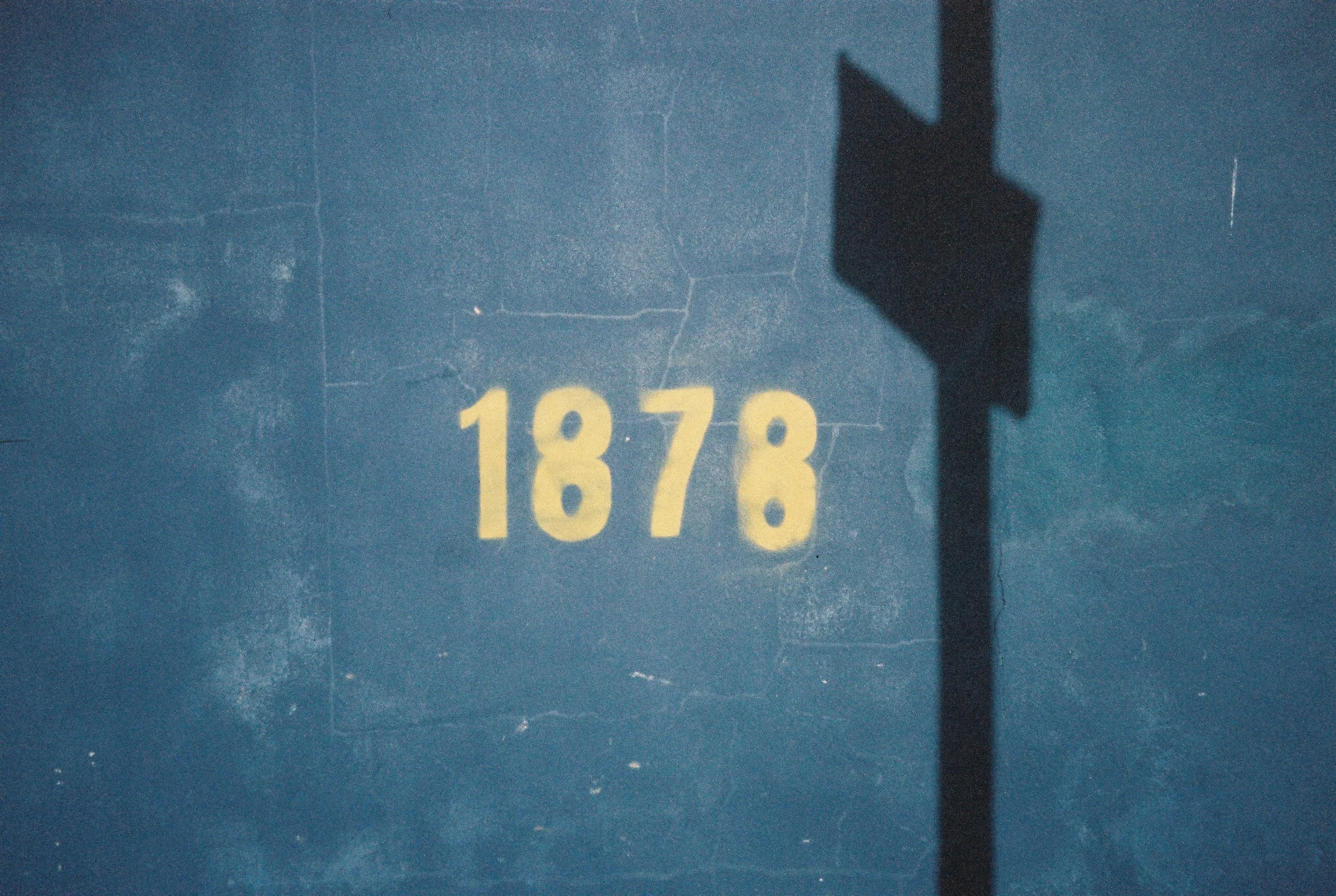
1878 painted on a wall opposite Goodison Park
Imperfection Is the Point
Digital photography often aims for technical excellence: sharpness, clarity, clean colour. Film doesn’t care about perfection. Light leaks, missed focus, uneven grain. These aren’t flaws, they’re evidence of process.
Football culture thrives on imperfection. Muddy pitches. Mis-hit volleys. Cracked voices singing out of tune. Film mirrors that reality far better than sterile precision ever could.
When you photograph football on analog, you accept uncertainty. You don’t know exactly what you’ve got until later. That delay adds emotional weight. The image becomes a memory rediscovered, not content instantly consumed.
Authenticity Over Aesthetics
Football is increasingly packaged for screens. Carefully graded highlights, branded overlays, perfectly framed social clips. There’s nothing wrong with that, but it isn’t the full story.
Analog photography cuts through that polish. It strips moments back to something more human. Faces in the crowd. Nervous hands gripping scarves. Steam rising from a pie on a cold afternoon.
Film doesn’t chase trends. It doesn’t optimise for algorithms. It simply records what’s there, honestly. In football culture, where authenticity is constantly under threat, that honesty matters.
Shooting Film Makes You a Better Digital Photographer
Photographing in analog doesn’t reject digital, it actually improves how you use it. Film trains your eye. It teaches restraint, observation, and trust in your instincts. You learn to read light properly. You learn to anticipate moments rather than react to them.
When you return to digital, you shoot with more purpose. Fewer frames. Better timing. Stronger storytelling.
In that sense, analog isn’t just nostalgia, it’s also discipline.
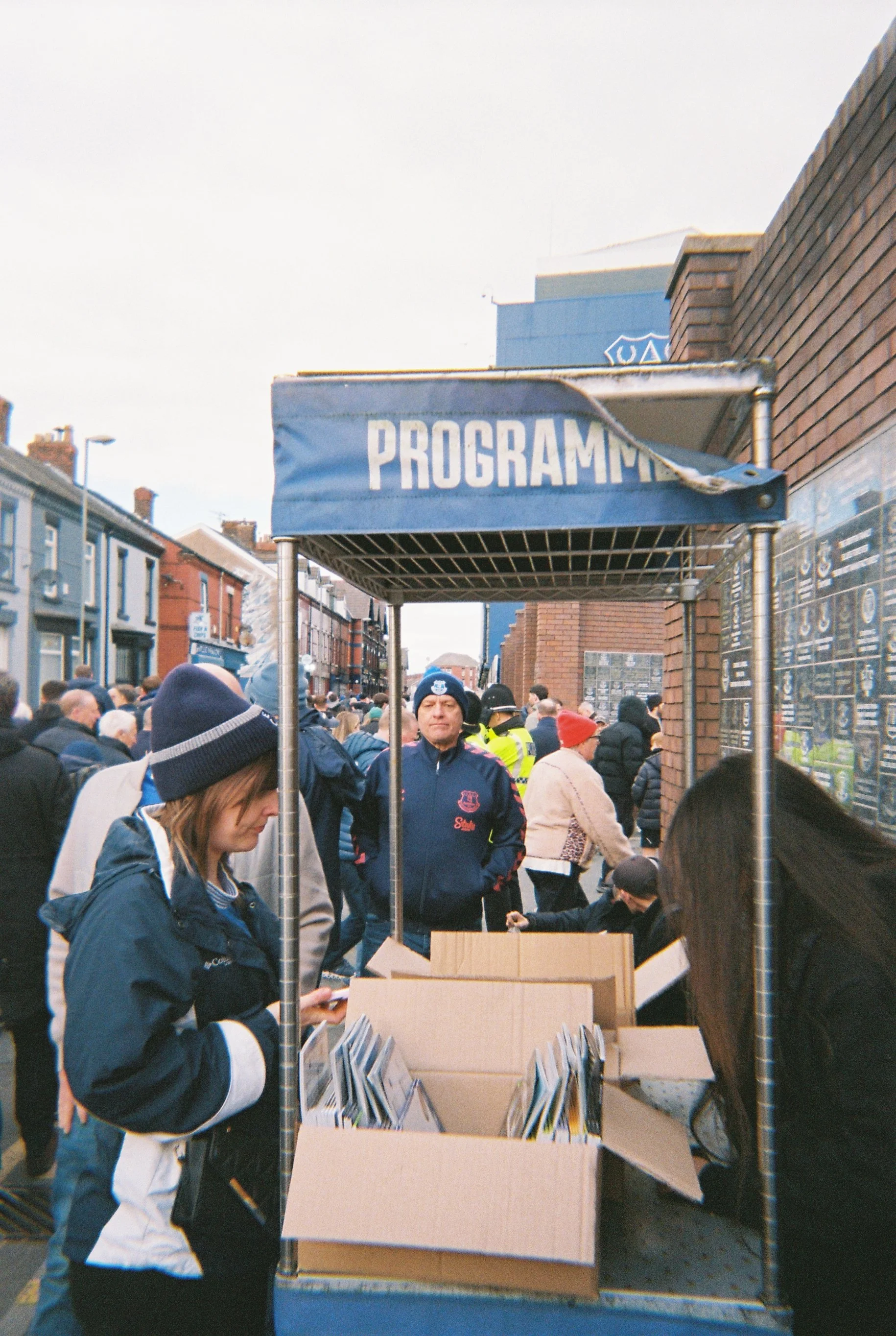
Fans at Goodison queue to purchase matchday programmes.
Why It Matters Now
As football becomes more global, more commercial, and more mediated through screens, the role of the photographer changes. We’re not just capturing what happens, we’re safeguarding what it means.
Analog photography resists speed, excess, and forgetfulness. It creates physical negatives in a world of vanishing files. It turns moments into objects, not just posts on a screen.
Football deserves that level of care. At every level.
Because long after the posts disappear and the feeds refresh, what remains are the memories. And film, more than anything else, understands how memory really works.
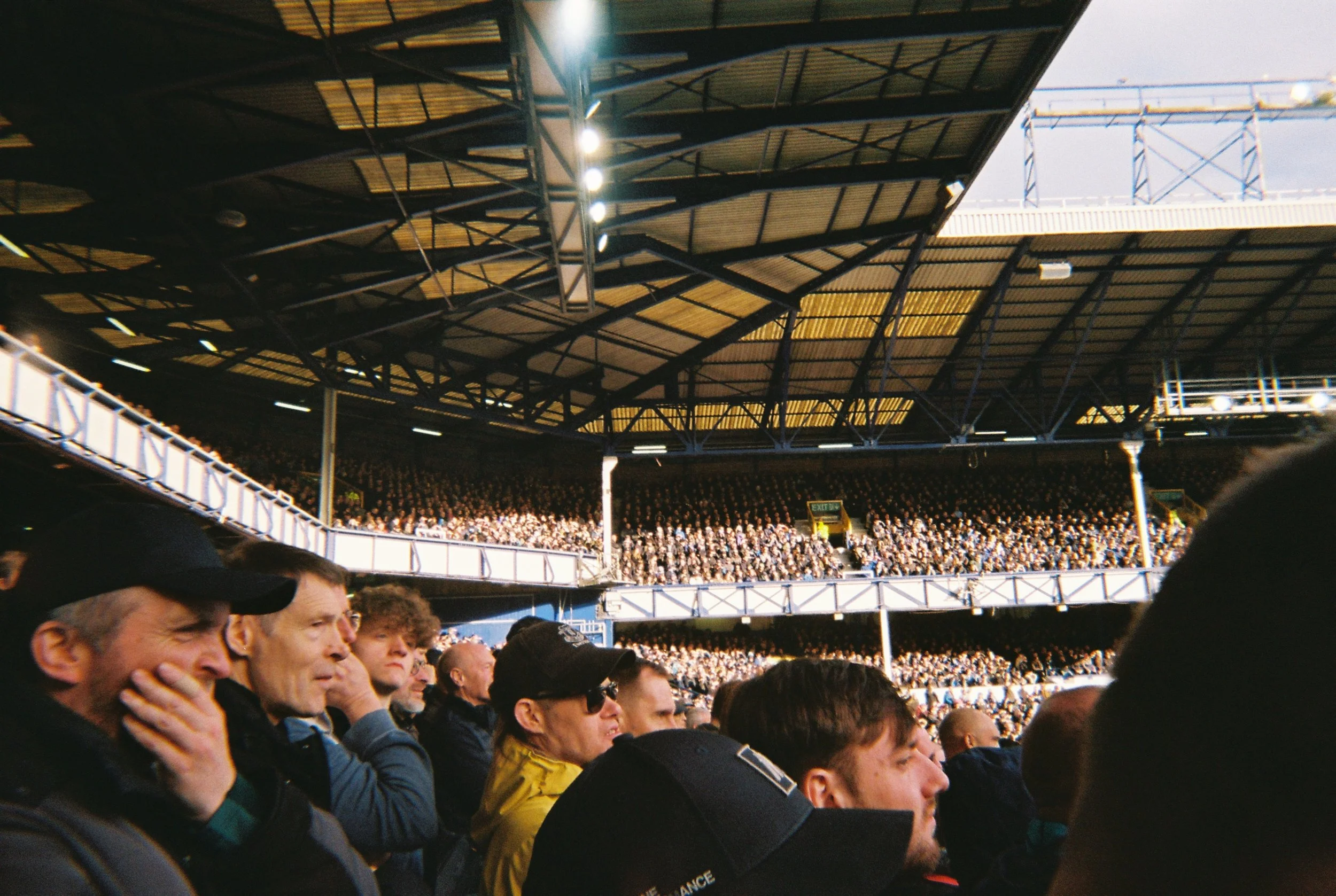
Sunshine on the Gwladys
